Help owners get reunited faster with their lost pets with a microchip
$25 can save a life and reconnect owners with their pets much quicker
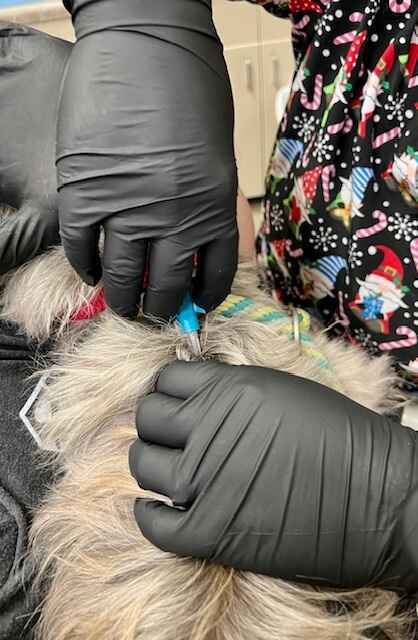
Why Microchip a Dog or Cat?
You might be thinking, “My pet wears a collar with an ID tag, so she doesn’t need a microchip;” “He never runs off and he always comes when called.”
First of all, securing an ID tag on your pet’s collar is always a good idea. It’s a quick and easy way for someone to find your contact information and get a hold of you in case your dog or cat escapes your watchful eye.
However, what if your dog’s ID tag falls off of the collar or becomes worn or illegible? What if your cat’s collar gets caught on a branch and breaks away, leaving her collarless and ID-less? Wouldn’t it be nice to have a more permanent backup plan—like a pet microchip?
Microchips for animals utilize something called radio frequency technology. Inside the rice-sized microchip is a tiny radio receiver and transponder. When the microchip reader triggers the microchip, it responds with a unique bit of data—the microchip number—that it sends back to the reader.
Animal shelters, veterinarians and other organizations that have the microchip reader scan stray or relinquished animals, for a microchip. Once they get that chip number, they’re able to use it to search one of several databases, depending on where the pet parent registered the microchip. The databases store information like the pet parent’s name, telephone number, physical address, email address and pet’s name.
So, if a pet is picked up as a stray, and the shelter worker is able to scan the chip, obtain a chip number and successfully track down the pet parent’s contact information, the pet can then be reunited with their family! Remember, however, that the contact information needs to be kept up to date—so if you move or change your phone number, let the pet microchip registry know right away.